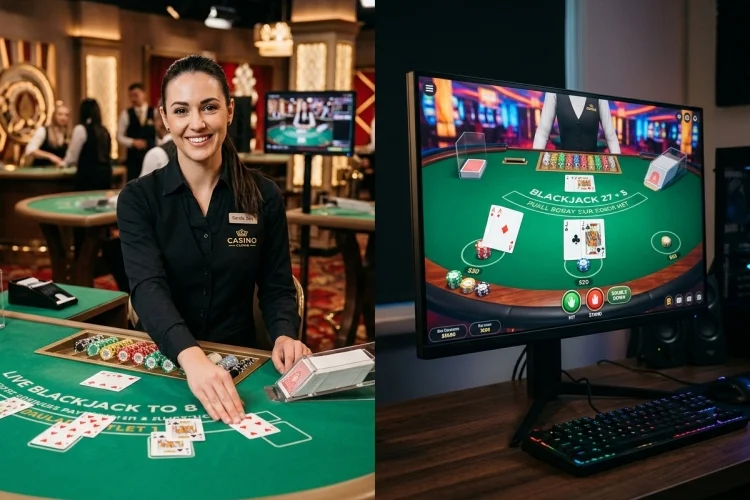
A live casino table may look simple from the player’s screen. A dealer distributes cards, spins a roulette wheel, or reveals a baccarat result while players place wagers through an interactive betting panel.
Behind that presentation, however, several technologies must operate together within seconds.
The technology behind live casino streaming includes studio cameras, microphones, video encoders, game-recognition tools, data servers, content delivery networks, and account-management software.
The video must remain synchronized with the betting timer and official result, even when viewers use different devices or internet connections.
Unlike many automated casino games, traditional live tables usually obtain their outcomes from physical actions. The cards dealt or the roulette pocket selected at the studio becomes the official result.
Software then captures that information, displays it to players, and settles the accepted wagers. Understanding this process helps explain how a physical casino table becomes an interactive online experience.
The Live Casino Studio
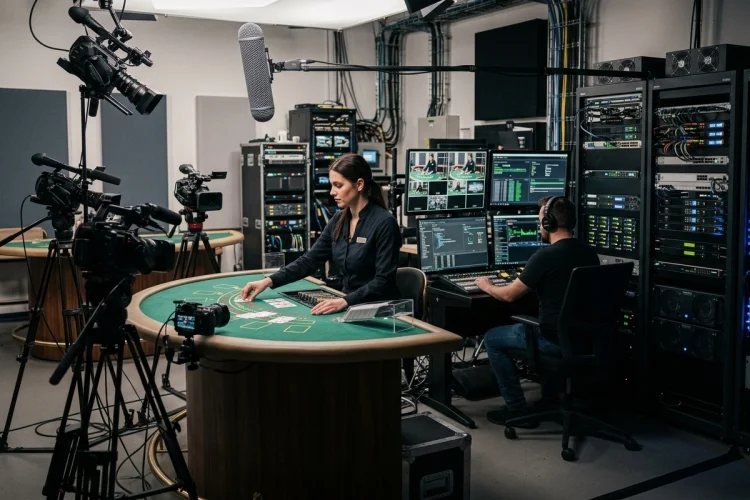
The streaming process begins in a controlled studio containing gaming tables, dealers, cameras, lighting, microphones, and monitoring equipment. Studios may operate as dedicated production facilities or from sections of physical casinos.
Several cameras can capture different views, such as the dealer, card area, roulette wheel, and wider table. A production system switches between these feeds or combines them into one layout.
Regulated live dealer facilities are expected to use suitable commercial equipment, trained staff, surveillance, and documented operating procedures.
The UK Gambling Commission also requires live dealer operations under its rules to be fair and independently auditable.
Cameras, Lighting, and Audio Capture
High-definition cameras must provide enough detail for players to see cards, chips, wheel results, and dealer actions. Consistent lighting reduces shadows and reflections that could make symbols difficult to recognize.
Microphones capture the dealer’s voice, while background audio may create a casino-like atmosphere. Audio and video timestamps help keep both tracks synchronized during encoding and delivery.
Different camera angles also support operational reviews. If a result is disputed, recorded footage can help supervisors determine what happened at the physical table.
Video Encoding and Compression
Raw studio video is too large to send directly to thousands of players. An encoder compresses the camera feed into a format that can travel efficiently over the internet.
The platform may create several versions of the stream at different resolutions and bitrates. A high-quality version is suitable for fast connections, while smaller versions help users on slower mobile networks.
Adaptive bitrate systems allow the video player to change quality when available bandwidth rises or falls. Cloudflare’s official streaming documentation describes adaptive delivery that automatically selects suitable resolutions for changing devices and network conditions.
How OCR Converts Physical Results Into Data
The video allows players to watch the game, but software also needs a machine-readable result. Optical character recognition, commonly known as OCR, can identify card values, roulette numbers, or other physical game information.
For example, when a dealer places a card on the table, recognition equipment can translate its rank and suit into digital data. The interface then displays that card beside the video and uses the information when settling wagers.
Gaming Laboratories International explains that OCR can convert physical dealer transactions into data used by live casino software. The result still originates from the real-life action rather than an automated RNG in a conventional live table.
Low-Latency Stream Distribution
Latency is the time between an action occurring in the studio and appearing on the player’s screen. Excessive delay would make interaction difficult because the betting period could close before the viewer sees the dealer’s announcement.
Streaming platforms may use low-latency HLS, WebRTC, or specialized delivery systems according to their scale and interaction requirements.
WebRTC provides browser APIs for real-time media and data communication, while HLS distributes video through ordinary HTTP infrastructure.
Modern managed streaming systems can deliver video with only a few seconds of delay, while real-time communication systems may reduce it further.
Amazon IVS, for example, documents low-latency delivery below five seconds and real-time stages below 300 milliseconds under supported conditions.
Synchronizing Bets and Results
The video stream is only one part of the game. The platform must also synchronize the betting timer, accepted wagers, dealer actions, recognized result, and balance updates.
When betting closes, the server records which wagers were accepted before the cutoff. Players should not be able to submit a bet after the physical outcome becomes known.
Testing laboratories examine this relationship between the table, player interface, and back-end system. GLI includes synchronicity, technical, staffing, premises, and system evaluations within its live dealer testing process.
The Player Interface
The final experience combines video with digital controls. The interface displays betting positions, chip values, account balance, game history, table limits, chat, and responsible-play settings.
The controls must respond quickly without interrupting the video. They also need to work across desktop browsers, mobile websites, and casino applications.
If a connection weakens, the video may reduce its resolution while the betting server continues processing account data separately. The operator’s official round record normally determines settlement when a player’s local screen freezes or becomes delayed.
Live casino streaming connects a physical table with a digital wagering platform.
Cameras and microphones capture the studio, encoders compress the feed, OCR translates physical outcomes into data, and low-latency delivery systems distribute the experience to players.
The most important technical challenge is synchronization. Video, betting windows, dealer actions, official results, and account settlements must remain aligned despite differences in devices and connection quality.
Before using a live casino, verify the operator’s licence, review its table rules, and understand how interrupted rounds are handled.
Test the stream at a low or demonstration stake where permitted, set an affordable budget, and use only platforms legally available in your jurisdiction.