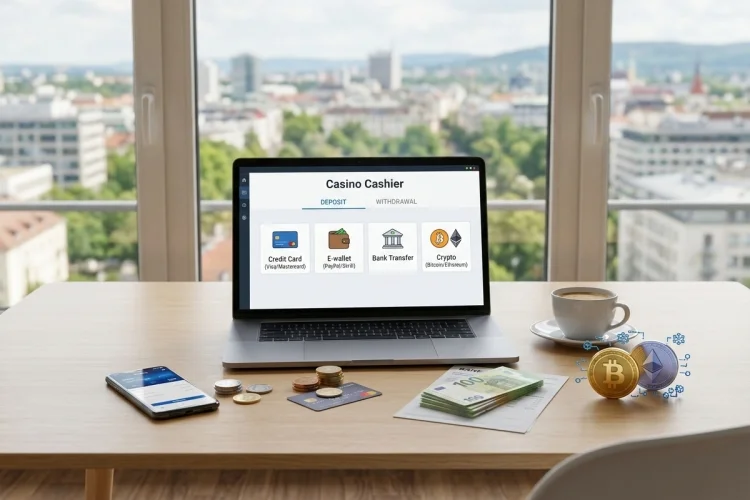
A $100 deposit does not always place exactly $100 in a casino account. A withdrawal can also arrive as a smaller amount than the figure shown on the cashier screen.
The difference may come from the operator, a bank, an e-wallet, a card issuer, a currency conversion, or a blockchain network.
That is why understanding Casino Payment fees matters before moving money. A site may advertise fee-free banking while an outside provider still applies charges.
This guide explains the main costs, who may collect them, and how to calculate the real price of a transaction without getting lost in technical language.
Why Payment Fees Appear
Moving money involves processors, security checks, banking networks, and account administration. A casino may absorb those costs, pass them to customers, or charge only for selected methods.
Pricing can vary by country, currency, transaction size, and provider. Skrill says its charges may depend on the payment method, currencies, and countries involved.
Deposit and Withdrawal Fees
A deposit fee is charged when money enters the casino account. It may be a flat amount, a percentage, or both. A 2% charge on $100, for example, costs $2.
Withdrawal fees apply when funds leave the site. A $5 charge represents 1% of a $500 cashout but 10% of a $50 cashout, so flat fees affect smaller transactions more heavily.
In Great Britain, withdrawal-processing charges must be transparent and cost-reflective. Rules in other markets may differ.
Bank, Card, and E-Wallet Costs
The casino is not always the company collecting the fee. A bank may charge for a transfer, while a card issuer may treat the transaction as international.
E-wallets can also charge for funding, withdrawing, or converting currency. PayPal’s Indonesian fee page says commercial purchases are generally free for buyers unless currency conversion is involved.
Always compare the casino cashier with the provider’s current pricing page.
Currency Conversion Charges
Conversion costs may appear as a percentage or be built into the exchange rate. If your bank uses IDR and the casino account uses EUR, the bank, wallet, card network, or operator may perform the conversion.
Visa explains that dynamic currency conversion can let customers pay in their home currency, but the quote may include an exchange rate and additional fees.
Compare the final amount received, not only the visible fee label.
Crypto Network Fees
Crypto transactions may include network or miner fees used to process transfers. The amount can change with blockchain activity and may be estimated before sending.
Coinbase explains that transfers outside its platform can involve network fees based on anticipated processing costs.
Also include the cost of buying the coin and converting a withdrawal back into local currency.
How to Calculate the Real Cost
For deposits, compare the amount leaving your account with the amount credited. If $102 leaves and $100 appears, the effective cost is $2.
For withdrawals, subtract every processing and conversion charge from the amount requested. A $200 cashout that becomes $190 costs $10, or 5%.
Two methods marked “zero fee” can still produce different results because their exchange rates may not match.
Casino Payment fees can come from the operator, bank, card issuer, e-wallet, or crypto network.
Deposit charges, withdrawal costs, foreign transaction fees, and exchange-rate markups can all reduce the value of your money. Before choosing a method, compare the amount credited, expected cashout cost, account currency, and provider terms.
Do not deposit extra simply to make a fee look smaller, and keep gambling within a fixed entertainment budget. Review the confirmation total carefully and choose the option with the clearest overall cost.